
Introduction
Are you considering replacing your boiler with a heat pump, but wondering if existing radiator heat pump can work without changing everything? Good question. In Brussels, Walloon Brabant and Flemish Brabant, many houses have radiators inherited from gas/oil installations. Compatibility depends mainly on the water temperature required and the insulation of your home. In this guide, we go into detail about the different cases, the adaptations possible, the budgets and the Belgian aid to help you decide with peace of mind.
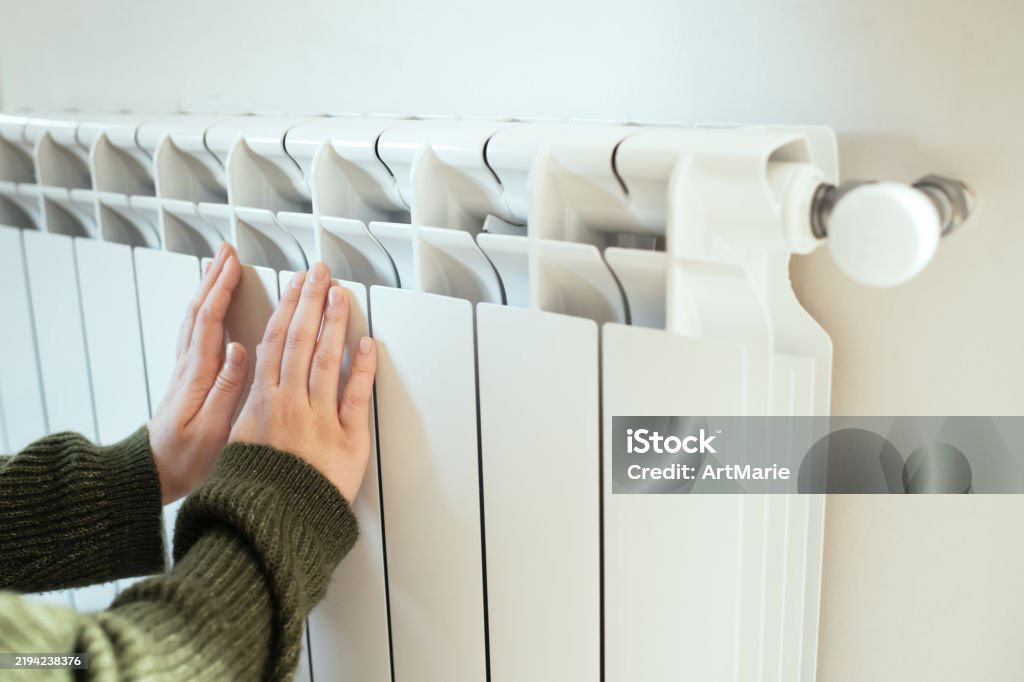
1) RADIATOR TYPES AND COMPATIBILITY
The existing radiator heat pump compatibility depends on the material, the exchange surface and the water temperature required.
Cast iron radiators (old and new)
- Attributes: high inertia, radiate gentle heat for a long time.
- Heat pump compatibility: good if the house is correctly insulated; in poorly insulated housing, they sometimes require 60-70°C for good comfort → the heat pump will have to work “HT” (high temperature) or adaptations are planned (see §3).
- Ideal for: renovated 30s-60s Brussels houses (window frames, attics).
Steel radiators (panels/convectors)
- Benefits: heat up quickly, many “low temperature” (BT) models.
- HVAC compatibility: often good, especially with large-area LV panels. Older compact panels requiring 65-75°C will need to be evaluated.
Aluminium radiators
- Attributes: responsive, light, good exchanges.
- Compatibility PAC: good to very good if properly sized; attention to network quality (galvanic corrosion if poorly protected copper/aluminium mix).
LV vs HV radiators
- BT (low temperature) : comfort from 35-45 °C → ideal PAC.
- HT (high temperature) : demand 65-75 °C → compatible with high temperature PAC or with adaptations (adding emitters/surfaces, insulation…).
Comparative table (summary)
| Type of emitter | With 35-45 °C heat pump | With 50-55 °C heat pump | With high T° heat pump (60-70 °C) |
|---|---|---|---|
| Model. (old) | ⚠️ depending on insulation | ✔️ often | ✔️ yes (lower efficiency) |
| Steel LV panels | ✔️ excellent | ✔️ | ✔️ |
| Old compact steel | ⚠️ limited | ⚠️-✔️ | ✔️ |
| Aluminium (modern) | ✔️ excellent | ✔️ | ✔️ |
| Heated floor (bonus) | ✔️ ideal | ✔️ | irrelevant |
In short: if your current comfort regularly requires more than 60 °C, the heat pump will still be possible, but you will need to consider High T° heat pump or adaptations
2) TECHNICAL FUNCTIONING: TEMPERATURES AND COMFORT
A PAC offers the best efficiency (high COP) when it supplies water between 35 and 50 °C. This is the opposite of a conventional boiler (gas/oil) optimised for 70-90 °C.
Typical operating temperatures
- PAC air-water “BT”: 35-45 °C (ideal with underfloor heating/LV radiators).
- PAC air-water “medium T°”: 45-55 °C (well-sized radiators).
- PAC “high T°”: 60-70 °C (compatible HT radiators, but lower efficiency).
Impact on thermal comfort
- If your radiators deliver enough heat at 45-50 °C, comfort will be equivalent to your old boiler, with lower consumption.
- If they require 65-75 °C to heat properly, a LV heat pump will be insufficient in the middle of winter (Brussels/Brabants), unless adaptations are made.
Full, partial, or not recommended compatibility
- Total: LV radiators or large exchange surface, well insulated dwelling → LV heat pump ok.
- Partial: mixed radiators, average insulation → 50-55 °C heat pump, partial replacement of some emitters.
- Little recommended (without adaptation): very HT radiators + poorly insulated house → HT heat pump possible but reduced economic interest; priority to insulation and/or the energy mix (heat pump + back-up).
3) POSSIBLE ADAPTATION SOLUTIONS
No need to break everything: we adapt the sender or the request.
3.1 Complete conservation of radiators (conditions)
- Insulation already performing well, losses contained.
- Tests at 50-55 °C conclusive over 48-72h (comfort OK) → we keep.
- Hydraulic balancing and room-by-room control recommended.
3.2 Partial and strategic replacement
- Replace 1-3 “limiter” radiators (living room, cold corridor) with wider LV models, quiet fan coil or oversized radiators.
- Objective: to run the entire network ≤ 50-55 °C.
3.3 Adding transmitters / exchange surfaces
- An additional radiator on penalising areas.
- LV fan coil units: exchange boost at low T°, low power consumption.
3.4 Improving isolation (top priority)
- Attics + roofs (immediate gains on starting T°).
- Efficient frames and treatment of thermal bridges.
- Direct effect: lower T° of water required, COP PAC up.
3.5 Supplementary underfloor heating (key piece)
- In targeted renovation (living room, kitchen).
- Allows you to lower the start T° to 35-40 °C while keeping radiators elsewhere.
Good to know (Brussels/Brabants): winters are “wet and cool” rather than polar; adapting for 50-55 °C max is often enough to guarantee comfort.
4) DECISION CRITERIA TO CHECK YOURSELF
Sizing and power requirements
- Calculation of loss per room (m², insulation, exposure).
- PAC chosen to cover 80-95% of needs, backup rare (very cold days).
Status and age of current radiators
- Radiators cast iron in good condition: very interesting if correctly insulated.
- modern steel panels: often BT compatible.
- Check mud/scaling (rinsing + sludge pot recommended).
Quality of home insulation
- Uninsulated attic = higher setpoint = hotter water = lower COP.
- Prioritise: roof/attic, walls, chassis, floor.
Surface to be heated and usage
- Large cathedral volumes → need for increased exchange surface area.
- Low-use rooms: lower set point, preserve living comfort.
Budget and objectives
- Objective maximum economy: aim for water ≤ 50 °C via adaptations.
- Objective zero emitting work: heat pump high T°, lower efficiency.
Warning: a PAC on HT radiators works, but its economic/energy benefit diminishes. A small lot of adaptations (2-3 strategic emitters + adjustments) transforms the deal.
5) STEPS TO A SUCCESSFUL PROJECT & DEADLINES
Phase 1 – Diagnosis (1-2 weeks)
- Technical visit: surface area, insulation, radiator condition.
- Test measurements: tests at 50-55 °C over 48-72h, comfort readings.
- Report on existing radiator heat pump compatibility.
Phase 2 – Design (1-2 weeks)
- Choice PAC (LV, medium T°, high T°) according to results.
- Adaptation plan: partial replacement, addition of fan coil units, balancing.
- Hydraulic sizing, room-by-room control.
Phase 3 – Completion (1-3 weeks)
- Boiler removal, heat pump installation, connections.
- replacement/addition of emitters if planned.
- Commissioning, adjustments, cold weather performance testing.
Average lead times: 4-8 weeks between first contact and commissioning (depending on equipment availability and schedule).
FAQ (frequently asked questions)
1) Is my 50s Brussels house with cast iron radiators compatible?
Yes, often if you have a minimum of insulation (attic/framework). We check with a test at 50-55 °C. If comfort drops, replace 1-2 key radiators or opt for a medium/high T° heat pump.
2) Do I need to change all my radiators for a heat pump?
No. In many cases, 2-4 strategic emitters are enough to work at ≤ 55 °C and maintain good efficiency.
3) High-temperature heat pump: good idea?
This is practical for conserving the entire HT network, but the efficiency is lower. Preferred if you can’t insulate or replace transmitters. Otherwise, aiming ≤ 50-55 °C is still more economical.
4) Are fan coils noisy?
Modern BT models are very quiet (modulated speeds). They help to boost exchange at low T° and therefore the COP.
5) Can I combine a heat pump with an existing boiler (bivalent)?
Yes. The heat pump covers most of the requirements, with the boiler taking over in very cold weather. Good compromise if average insulation and HT radiators.
6) What savings can you expect?
Depending on insulation and water T°, -25 to -45% vs old boiler. Lowering the temperature to ≤ 50 °C provides maximum savings.
7) What steps should be taken for premiums?
Prepare audit/study, review, technical data sheets, proof of commissioning. Conditions differ between Brussels, Wallonia and Flanders.
8) What about the production of domestic hot water (DHW)?
We can integrate a ballon PAC (laminate) or keep a appoint. Sizing depends on use (showers/baths).
ELEMENTAL WORKS : YOUR PAC EXPERT IN BRUSSELS & BRABANTS
Who are we?
Elemental Works supports homeowners in Brussels (19 communes), Walloon Brabant and Flemish Brabant with their HPAC projects: audit, compatibility study heat pump existing radiators, installation, settings and support with prizes.
Our commitments:
- Free, detailed quote
- Fixed prices and clear planning
- Deadlines met
- Guarantee on material and installation
- Energy optimisation (flow T° settings, balancing, regulation)
Specialities:
- Adaptation PAC on cast iron/steel/aluminium networks.
- Partial replacement of emitters (LV, fan coil units)
- Localised heating floor integration
- Assistance with premium files (Brussels/Wallonia/Flanders)
Internal links (anchor suggestions)
- [heat pump vs boiler: which economic solution?]
- [renovate insulation before changing heating]
- [noisy boiler: causes and solutions]
- [water pressure problem: diagnosis]
In conclusion
Existing radiator heat pumps: yes, this is compatible in many cases, provided that you aim for a flow T° ≤ 50-55 °C thanks to small adaptations (and/or insulation). For very-high-temperature networks, the HV heat pump or heat pump/boiler coupling remain viable options, especially for gradual renovation. Need an unbiased diagnosis in Brussels or Brabant?